Managing an ageing steel stairway above a busy sidewalk in Astoria or Sunnyside requires careful attention to corrosion, connections and public safety. We help Queens owners coordinate suitable contractors, obtain comparable proposals and maintain records of completed repairs.
- Work based on a licensed professional's written scope
- Lead-safe practices for older coatings
- Photographic records for building files
Why Fire Escapes Fail, and Why It Matters
Corrosion can weaken steel, damage wall connections and compromise safe access. Loose components may also create hazards for pedestrians below.
What a Fire Escape Is For
It provides a secondary means of egress. Platforms, stairs, ladders and railings must remain serviceable and unobstructed.
Why They Fail
- Water collects on platforms and around joints.
- Rust gradually reduces steel thickness.
- Anchors corrode and surrounding masonry cracks.
- Treads, railings and connections deteriorate.
- Old paint conceals damage or traps moisture.
- Stored items obstruct access or add unintended loads.
Warning Signs to Watch For
Flaking Rust and Thin Steel
Heavy rust, holes or missing metal may indicate significant deterioration.
Loose or Sagging Platforms
Visible movement, tilting or unusual bounce requires professional assessment.
Damaged Treads and Railings
Missing steps, cracked components or unstable handrails need attention.
Loose Anchors or Cracks at the Wall
Gaps, movement or damaged brickwork around connections may indicate a structural concern.
Stuck Ladders
Drop ladders and moving components should operate properly and remain accessible.
If a section appears unstable, prevent access and contact Local Law 11 Inspection and Repair Queens promptly. Call 911 if there is immediate danger.
Note From Our Team
When moisture penetrates the connection pockets triggers pack rust. As this hidden corrosion expands, it exerts incredible pressure (up to 10,000 PSI) on the surrounding masonry. This causes the brickwork to crack and split, severely compromising the dead-load capacity of the main cantilevered support channels.
Fire Escape Inspection in NYC: What Gets Checked
Part of Your Facade Inspection
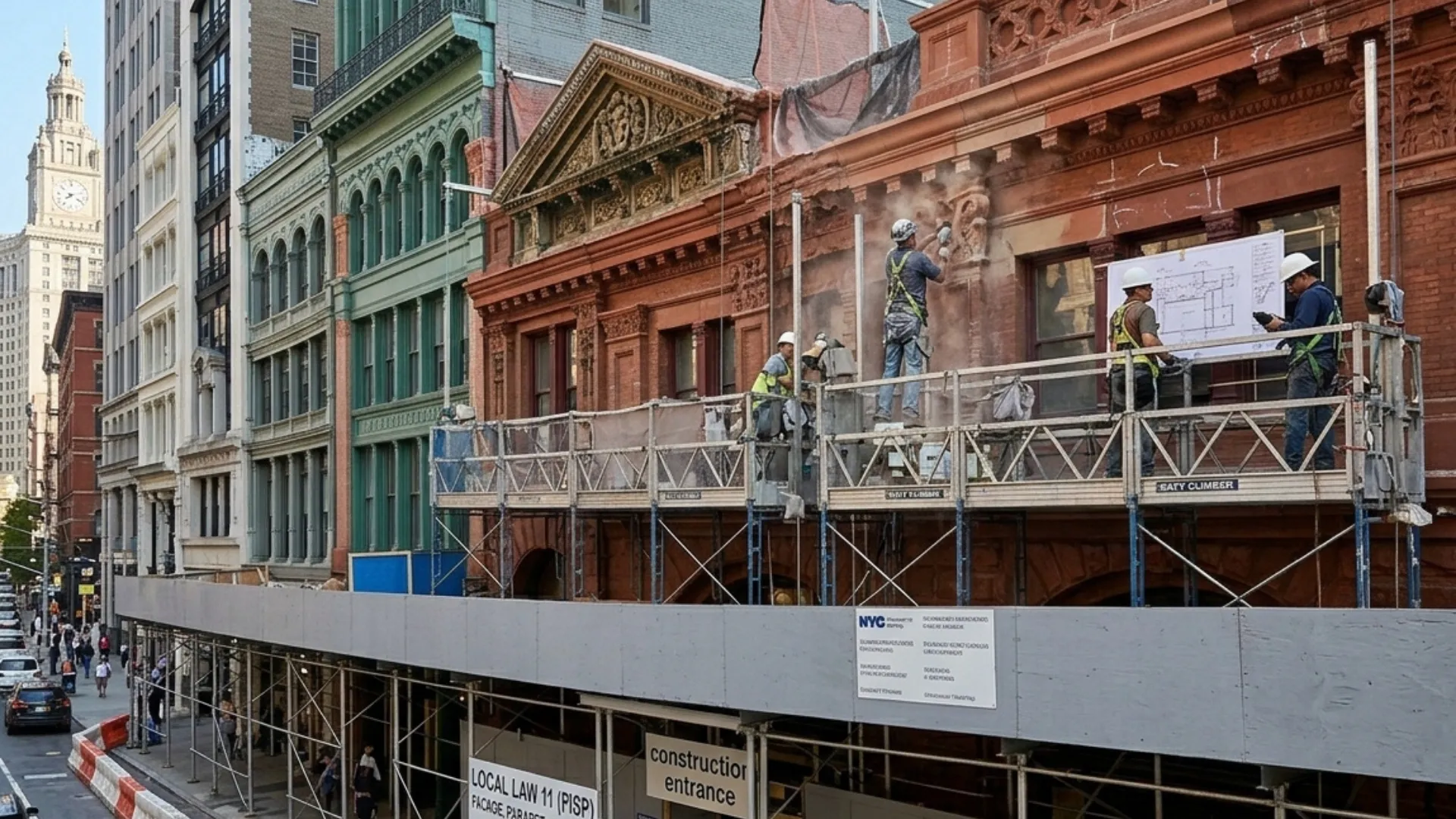
Buildings taller than six stories generally require periodic exterior-wall inspections under NYC's Facade Inspection and Safety Program (FISP). Covered inspections include exterior walls and appurtenances. Confirm the applicable requirements with a Qualified Exterior Wall Inspector (QEWI).
What the Inspector Looks At
Platforms, stairs, ladders, railings, corrosion, steel condition, anchors and surrounding masonry may require examination.
When an Engineer's Review Is Needed
Severe corrosion, questionable anchors or damaged connections may require further testing or engineered specifications. The responsible professional determines the appropriate approach.
Fire Escape Restoration Options in NYC
Rust Removal and Recoating
Remove corrosion, prepare the surface, apply suitable primer and finish with a protective coating. Fire escape painting in Queens will not correct weakened steel or inadequate preparation.
Replacing Treads, Railings and Platform Parts
Replace damaged components according to the approved specifications and suitable material requirements.
Re-Anchoring and Wall Connection Repair
Defective anchors and damaged supporting masonry require repairs suited to the existing structure. Related work may also involve balcony and railing repair.
Drop Ladders and Stairs
Repair or replace malfunctioning components so they operate as intended.
Full Replacement
Extensive corrosion may make replacement more appropriate than repeated patching. A qualified professional should determine the design and required approvals.
Removal and Decommissioning
Removal requires professional review and applicable approvals. Required means of egress must not be eliminated without an approved alternative.
The 5-Year NYC Fire Code Mandate
Do not assume your building is exempt just because it is under six stories. Per NYC Fire Code § 1027.6, all exterior fire escapes, stairs, and structural egress systems must be inspected, maintained, and certified structurally safe every five years by a registered Design Professional or a licensed Master Rigger. The building owner must retain these signed compliance records on file, ready for immediate presentation during any unannounced FDNY or DOB facility inspection.
How a Fire Escape Repair Project Works
Step 1: Safety Check
Restrict access to suspect sections and arrange necessary protection below.
Step 2: Define the Scope
The responsible professional documents required work so contractors can price comparable specifications.
Step 3: Coordinate With Residents
Agree on access dates, notices and arrangements for apartments or shared areas.
Notice to Residents
Explain the schedule, access requirements and items residents must clear.
Keeping Exits Safe During Work
Contractors must plan construction around applicable egress and safety requirements.
Step 4: Repair With Lead-Safe Practices
Older coatings may contain lead. Confirm applicable requirements and contractor qualifications before disturbing painted surfaces.
Step 5: Prime, Coat and Check
Apply specified protective coatings and arrange required checks before returning the structure to service.
Step 6: Document the Work
Collect photographs, invoices, material details and relevant professional sign-offs for maintenance files and future inspections.
Fire Escape Repair Costs and Timelines
What Drives the Cost
- Number of floors and platforms
- Corrosion and component replacement
- Anchor condition and masonry damage
- Paint preparation and lead-safe requirements
- Access equipment, permits and project complexity
Typical Timeline
Minor work may take days or weeks. Extensive rehabilitation or replacement can take longer, depending on approvals, weather, materials and resident access. Request a written estimate and schedule based on an actual assessment.
Fire Escape Repair Across Queens Neighborhoods
Astoria, Sunnyside and Ridgewood: Prewar Walk-Ups
Older steel structures may need corrosion treatment, connection checks and careful surface preparation.
Jackson Heights and Elmhurst: Older Apartment Buildings
Check wall connections and supporting masonry where multiple elevations require attention.
Jamaica and Richmond Hill: Older Mixed-Use Buildings
Street-facing structures require careful planning around entrances, pedestrians and occupied storefronts.
Far Rockaway and Howard Beach: Coastal Corrosion
Salt and moisture can accelerate deterioration, making material condition and protective coatings important.
Note: These are general considerations, not confirmed defects at individual properties.
Why Owners Choose Us
- Defined Scope: Contractors price work based on professional specifications.
- Safety Awareness: Reported instability is referred for appropriate professional assessment.
- Lead-Safe Planning: Older coatings and relevant precautions are considered before work begins.
- Vetted Contractors: Review relevant qualifications, insurance and project experience before selection.
- Documented Results: Organised records support maintenance files and professional follow-up.
Here's what Simone L. from Elmhurst has to say about Local 11 Queens:
"Transparent bidding prevented an expensive full replacement."
Another company told me my entire fire escape structure in Elmhurst had to be fully demolished and replaced for an astronomical fee. I used this platform to get an independent, professional assessment. It turned out the main steel frames were sound, and we only needed targeted tread replacement and masonry re-anchoring. They saved me thousands through their competitive contractor bidding network.
Frequently Asked Questions About Fire Escape Repair in Queens
Are fire escapes covered by Local Law 11?
FISP applies to buildings taller than six stories and covers exterior walls and appurtenances. Confirm the applicable inspection scope with a qualified exterior wall inspector.
Is my rusty fire escape safe to use?
Appearance alone cannot establish structural safety. Avoid using suspect sections and seek professional assessment if you notice heavy corrosion, loose anchors or unstable platforms.
Can the structure be repaired, or must it be replaced?
Sound steel may allow targeted repairs. Extensive corrosion or damaged connections may require substantial replacement, as determined by the responsible professional.
Do repairs require permits?
Some work requires permits or approved plans. Confirm requirements for the proposed scope with the contractor and responsible design professional before starting.
Does painting fix rust?
Painting alone does not repair weakened metal. Corrosion must be assessed and properly addressed before suitable protective coatings are applied.
Who is responsible for maintenance?
Property owners are generally responsible for maintaining safe building conditions. Residents should keep access areas clear and report damage promptly.
Get Matched With a Vetted Fire Escape Contractor in Queens
Concerned about rust, loose anchors or damaged steps? Share your building details so we can help connect you with contractors suited to your repair needs.
Disclaimer: Contractors perform construction independently. Inspections and technical specifications are provided by appropriately qualified professionals. Confirm applicable permits and safety requirements before work begins.